AI & Art Student
Audrey Song
Audrey Song is an eighteen-year-old artist from North Carolina, attending this program on a YoungArts scholarship. She recently graduated from the high school program at the University of North Carolina School of the Arts, where she trained intensively in sculpture, painting, and design. This fall she begins at Wellesley College in Media Arts and Sciences, with the intention of working between computer science and art studio practice at Wellesley and MIT's Media Lab. She works across sculpture, painting, and digital media, and has grown interested in what becomes possible when a material process is rebuilt as software, where the constraints of a physical medium can be altered.
Revolutionized Riso
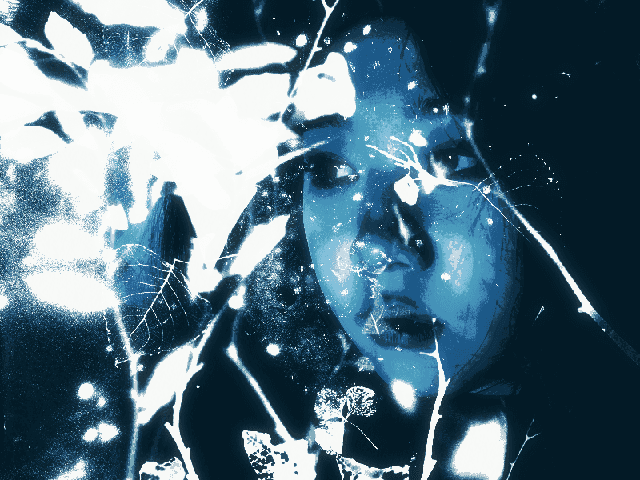
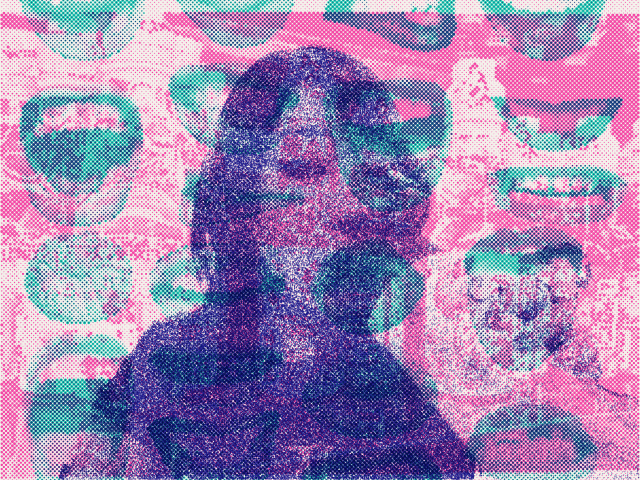
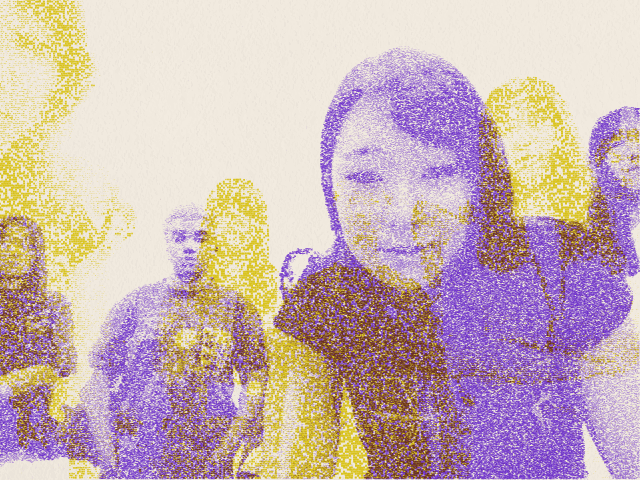
A browser-based printing press that turns a live camera into layered risograph and cyanotype prints. Both processes are demanding in physical form. A riso needs a separate drum for every color and each pass is permanent; while a hand-coated cyanotype takes a sun exposure, a wash, and most of an afternoon. Stacking a dozen exposures on one sheet isn't practical. This isn't a substitute for either process so much as a place to be reckless with them, and that's what makes the layering possible at all. Each photo capture uses a body-segmentation model to lift the figure from its background, then rebuilds it. Riso mode screens the subject into halftone dots sized by local darkness and composites them through multiply, the way ink sits down on paper; inks lighter than the stock route through a second buffer so pale color still reads on dark sheets. Cyanotype mode remaps luminance onto a Prussian-blue ramp, quantises it into tonal steps, and drives opacity from exposure, so shadows fall to transparency and each new layer only adds light to what came before. The preview toggles between three states: - A live proof showing the processed result as you move and adjust settings, - A plain camera view for framing - Paper view preview Paper and ink color are adjustable, captures can be undone and redone, and uploaded images enter as their own screened layer. The camera needs a few seconds to start and body tracking a moment longer. Wait for the panel to read "ready" before your first capture.
Link to project: here
Process
I started with a moodboard and not much else; camera interactivity, risograph layering, a color wheel, paper grain, snapshots you could stack into overprints. With lots of experience with demanding mediums like Risograph and cyanotype which both take hours with uncertain results, I wanted to create something that could provide the same aesthetic layering in less steps. Most of the work was figuring out which parts of it were actually buildable.
My first version was a chunky halftone over a webcam feed, and it looked like a computer approximating a print instead of a print. Getting it to read as ink took a lot of passes: shrinking the dots down to sub-pixel, scattering them instead of using a clean grid, treating shadows differently from midtones.
Cyanotype I rebuilt four separate times. Blue risograph didn't work, lines didn't work, a soft blurred wash didn't work. What finally did was giving up on marks entirely and remapping the photo's luminance onto a cyanotype palette, with opacity tied to exposure so the shadows go transparent and every new layer can only add light which is the thing that lets captures actually stack instead of covering each other up.
About sixteen builds, most of them throwing out something that already worked for something that worked better.